
Overview
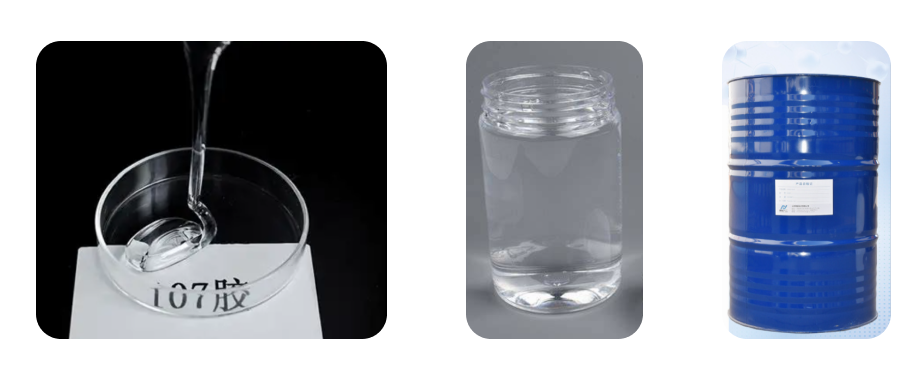
Room-Temperature Specialty Silicone Rubber is a low-viscosity, linear hydroxyl-terminated polydimethylsiloxane, synthesized through the polymerization of siloxane monomers. It is an organosilicon material with hydroxyl groups at both molecular chain ends.
Features
In addition to the general properties of methyl silicone oil, it has hydroxyl reactive activity, allowing it to be crosslinked into elastomers (or membranes) or used to prepare new materials. This product is a colorless, transparent liquid with excellent electrical insulation and outstanding resistance to both high and low temperatures. It has a high flash point, low freezing point, small viscosity-temperature coefficient, high compressibility, low surface tension, excellent hydrophobicity and moisture resistance, chemical inertness, and good physiological compatibility. It can be used continuously in the range of –50 °C to +250 °C.
Applications
As a primary raw material for RTV mold-making silicone rubber, defoaming agents, and silicone glass adhesives.
Due to its excellent electrical insulation, it is widely used in radio, electronic instruments, semiconductors, and electronic components as an insulating, moisture-proof, shock-resistant, and heat-resistant potting material.
In the automotive and machinery industries, it can be used for rubber roller materials.
In the textile, plastics, and printing industries, it is also applied as roller materials.
In the construction industry, it serves as a sealing material for joints.
Owing to its excellent release properties, it is particularly suitable for precision molds and impression materials.
